
The new year is off to a noticeably slower start in Park City’s real estate market, especially compared to the strong finish we saw at the end of 2025. While December showed momentum in pricing and volume, January’s numbers reflect a seasonal cooldown combined with a more cautious buyer environment.
Luxury and resort-driven markets like Park City often experience sharper month-to-month swings, making it important to look beyond headlines and evaluate both year-over-year trends and month-over-month shifts.
Below is a breakdown of how January 2026 compares to December 2025 — and what these changes really mean for buyers and sellers.
Inventory: Homes Available
December: 163 homes available (−21.3% YOY)
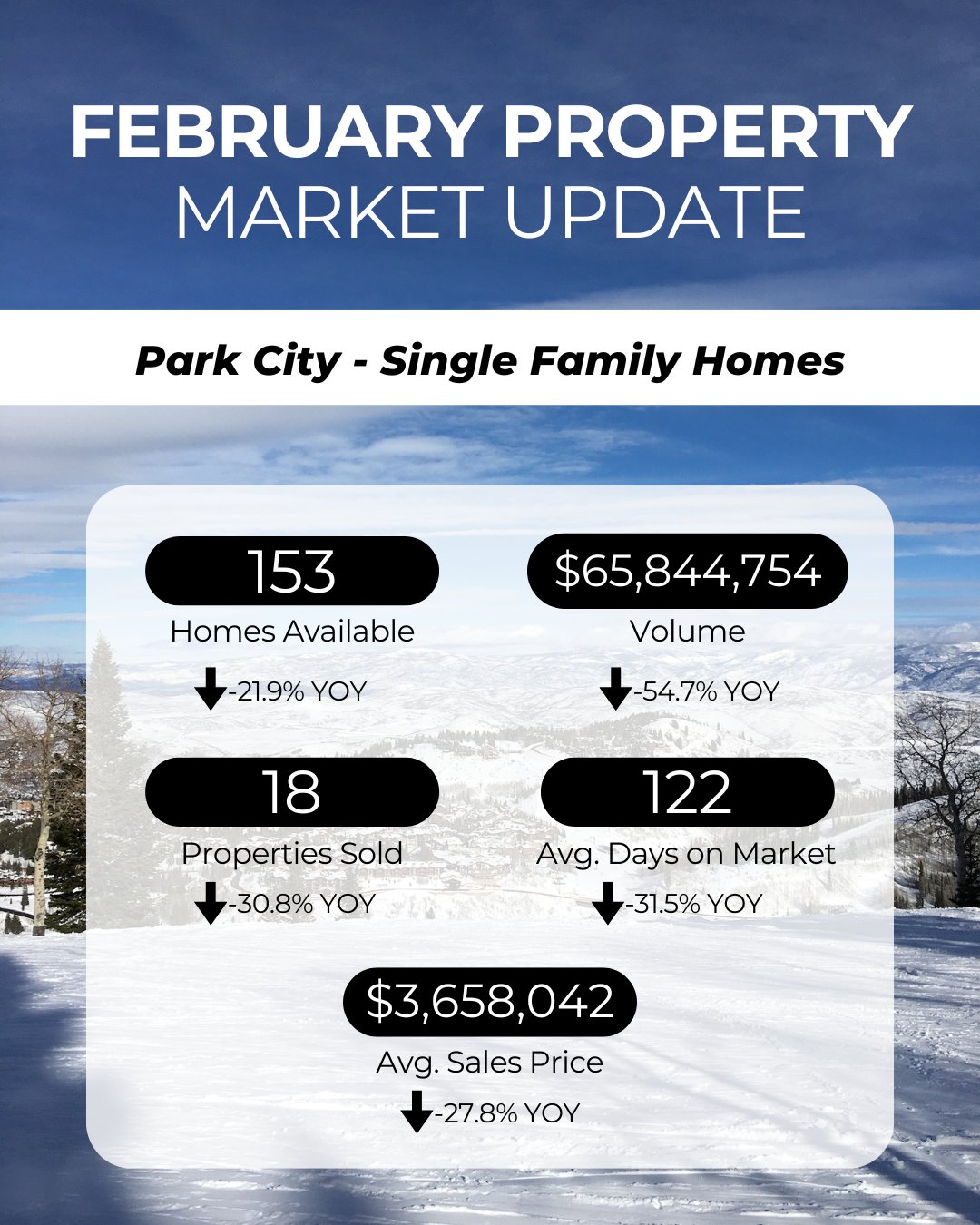
January: 153 homes available (−21.9% YOY)
Inventory continued to tighten moving into the new year. Month over month, available homes declined by 10 listings, maintaining a consistent year-over-year reduction of roughly 22%.
Despite slower sales activity, supply remains constrained — a defining characteristic of the Park City market.
Insight:
Limited inventory continues to support long-term pricing stability. While buyer activity has slowed seasonally, the lack of supply prevents dramatic downward pressure on values. Sellers still benefit from reduced competition, while buyers should be prepared for selective, competitive opportunities.
Sales Activity: Properties Sold
December: 40 properties sold (−7.0% YOY)
January: 18 properties sold (−30.8% YOY)
Closed sales dropped significantly in January, with 22 fewer transactions compared to December. Year over year, January activity was down nearly 31%.
Seasonality plays a role in resort-driven markets like Park City, where winter months can bring fewer closings despite steady buyer interest.
Insight:
The slowdown in sales reflects a more cautious buyer environment rather than a demand collapse. Buyers are taking more time and being more selective. Sellers should expect longer marketing timelines compared to the fast-paced conditions of previous years.
Sales Volume: Total Dollar Volume
December: $145,064,942 (+5.0% YOY)
January: $65,844,754 (−54.7% YOY)
Total volume dropped sharply month over month, declining by nearly $79 million. Year over year, January volume was down approximately 55%.
This significant change reflects both fewer transactions and a shift in the price point mix of properties that closed.
Insight:
Luxury markets often see large swings in monthly volume depending on whether ultra-high-end properties close. January’s decline suggests fewer high-dollar transactions rather than a broad market correction.
Market Pace: Average Days on Market
December: 71 days (−22.8% YOY)
January: 122 days (+31.5% YOY)
Homes took considerably longer to sell in January, increasing by 51 days month over month. Year over year, marketing time expanded by more than 30%.
This marks one of the clearest signals of a shifting pace.
Insight:
Buyers have regained negotiating leverage and are moving more deliberately. Proper pricing and strong property presentation are critical in today’s environment. Sellers should plan for longer exposure periods than in prior years.
Pricing: Average Sales Price
December: $3,968,811 (+18.2% YOY)
January: $3,658,042 (−27.8% YOY)
The average sales price declined by roughly $310,000 month over month and was down nearly 28% compared to January 2025.
However, Park City’s luxury-heavy market is particularly sensitive to the mix of properties sold each month.
Insight:
A lower average price does not necessarily indicate falling property values across the board. It often reflects fewer ultra-luxury closings during the month. Overall pricing remains elevated, with the average sale still well above $3.6M.
Overall Takeaway
January 2026 reflects a market adjusting after a strong finish to 2025. Inventory remains tight, but sales pace and volume have slowed, and homes are taking longer to sell.
This is not a collapse — it is normalization.
Buyers may find more negotiating opportunity than in recent years. Sellers must lean into strategic pricing and patience.
In a market like Park City, understanding nuance matters far more than reacting to headlines. Timing, positioning, and property type all play major roles in outcomes.


